The last 30 days have been some of the hardest for most Codex users to comprehend.
One day, they were using a frontier model (even if it was relatively expensive usage-wise), getting more usage resets than they knew what to do with, and generally content besides the usual 5-hour-limit grumbling on Plus plans.
Then Opus 5.5 dropped. Not only is it on par with Astra, but it is also, anecdotally, 10x as efficient.
Well, as most Codex users usually see it, there was nothing to FOMO over. Just a matter of time before the next top-tier, dirt-cheap model dropped from OpenAI. And OpenAI’s social accounts kept hyping up the next model.
Instead, a series of unfortunate events followed.
The New Sol
The model OpenAI released — GPT-6 Sol — was superior on all the metrics released on the same day as Opus 5.5, only to turn out to be the worst model in OpenAI’s history. It closely matched the overhyped 5.0 release.
It didn’t matter which way users held this model; they couldn’t make it work. It’s so dumb that even the old Luna outperformed it in regular work.
There was more hype from OpenAI about the upcoming DevDay, where all the issues would be fixed and all would be well.
The $200 Plan
Just a few hours before DevDay, OpenAI proudly reopened its much-wanted $200 plan, which is close to the average monthly gas bill that most Americans pay.
Only, it was then declared that usage would drop from 20x to 10x while the price remained the same.
The social-media clamour was instant and loud. Codex users, already looking jealously at their Opus 5.5 neighbours, started FOMO-ing their way into Anthropic subscriptions.
OpenAI said not to worry and that they had more surprises ahead that would be announced at DevDay.
DevDay
DevDay turned out to be a big dud day for Codex users. Not only did the usage cut for new plans remain, but old-plan users were given a month to transition into the significantly lower-usage new plans.
And, more importantly, the 20x/5x labels were replaced altogether with vague “more usage” and “highest included usage” wording.
And just to rub salt in the wounds, a new $500 plan was announced that has 25x usage compared with the Plus plan. So, more than double the price for almost the same usage.
And the “Dev” Day continued to release feature after feature that was irrelevant to devs and Codex users in general.
A new model was announced: GPT-6.1 Sol, which they clearly wanted to release as Astra Minor, but their hand got pushed by how good Opus 5.5 was at both usage and quality levels.
The “Dots” feature, which was released with a lot of fanfare, turned out to be a dud as well. It was so undercooked and badly designed that users struggled to understand what its USP was compared with regular ChatGPT chat.
The new 6.1 ‘Slo’ model
The new model, while clearly as efficient usage-wise and almost the same quality as Opus/Astra, ran slower than molasses. Users reported as high as 2 minutes to first token, 4-minute compactions (when they didn’t time out), and 20 tokens/second throughput, which is lower than local models running on weak GPUs with some of the workload offloaded to RAM.
The efficiency side of that model shift is what I wrote about in The AI Race Just Got Awkward.
All this might look like a collection of unconnected and random decisions, but if we take a step back, it’s clear why OpenAI is being forced into these clearly Codex-user-base-destructive actions against the same users it courted heavily over the last four months.
Enter Muse
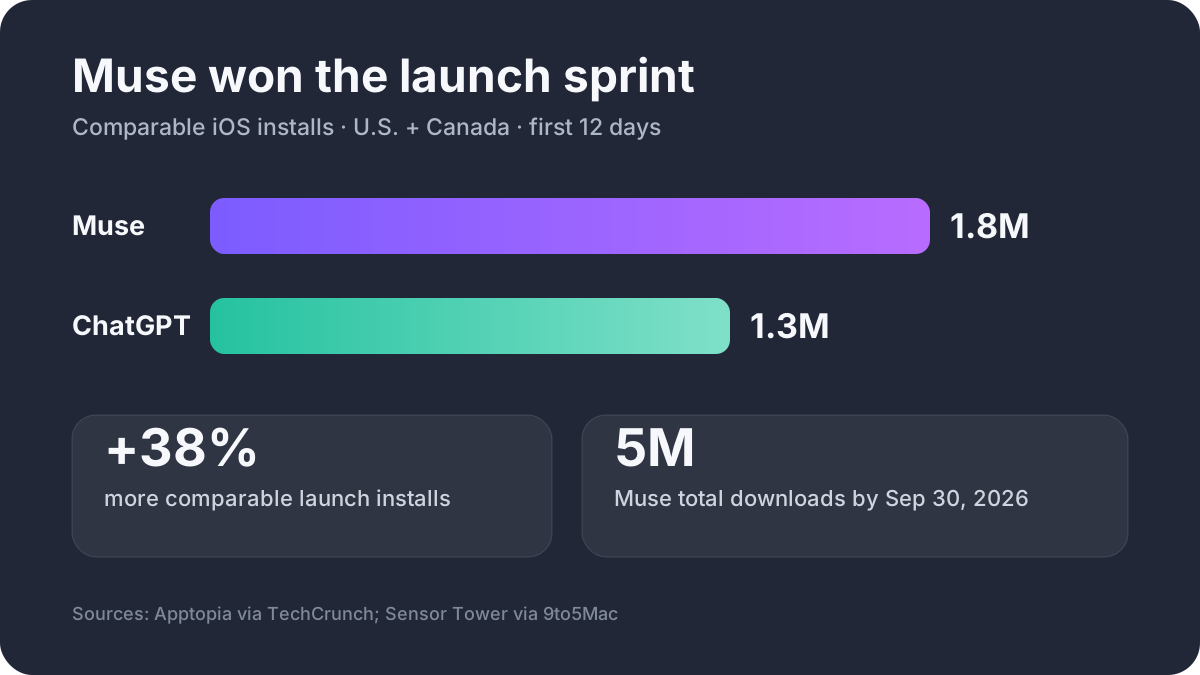
The troubles started with Meta’s release of the Muse app, which quickly went on to dethrone ChatGPT as the top-downloaded app on both the Play Store and App Store in the U.S.
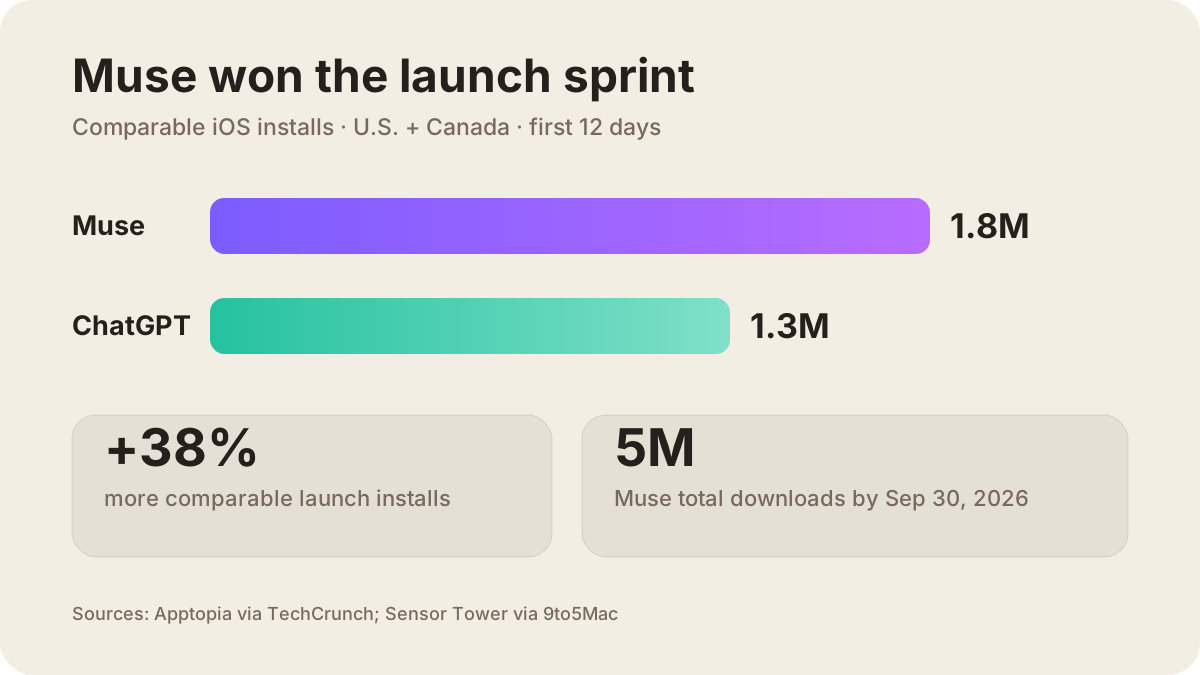
Why was that an existential crisis for OpenAI while it was not for Anthropic or Google?
Because, unlike OpenAI, Anthropic doesn’t bill itself as a consumer-focused AI and clearly has a more enterprise-focused approach. Its whole Claude Code and dev-focused approach is only to let the devs lead its adoption into enterprises — something it otherwise finds difficult, lacking the long-term contracts that both Microsoft and Google enjoy.
And why wasn’t Google bothered?
Because they are making a ton of money selling shovels and have stuck to their generally large segment of users who won’t pay for AI but aren’t looking for high-quality responses either. Google’s entire approach is to have lightning-fast models that are competent only when connected to Google Search, so they can continue to shove ads down the throats of their users, which, tbh, they don’t seem to mind much.
The Numbers
But OpenAI’s entire valuation is predicated on it having a giant lead with its “normie” base. Like a premium Google.
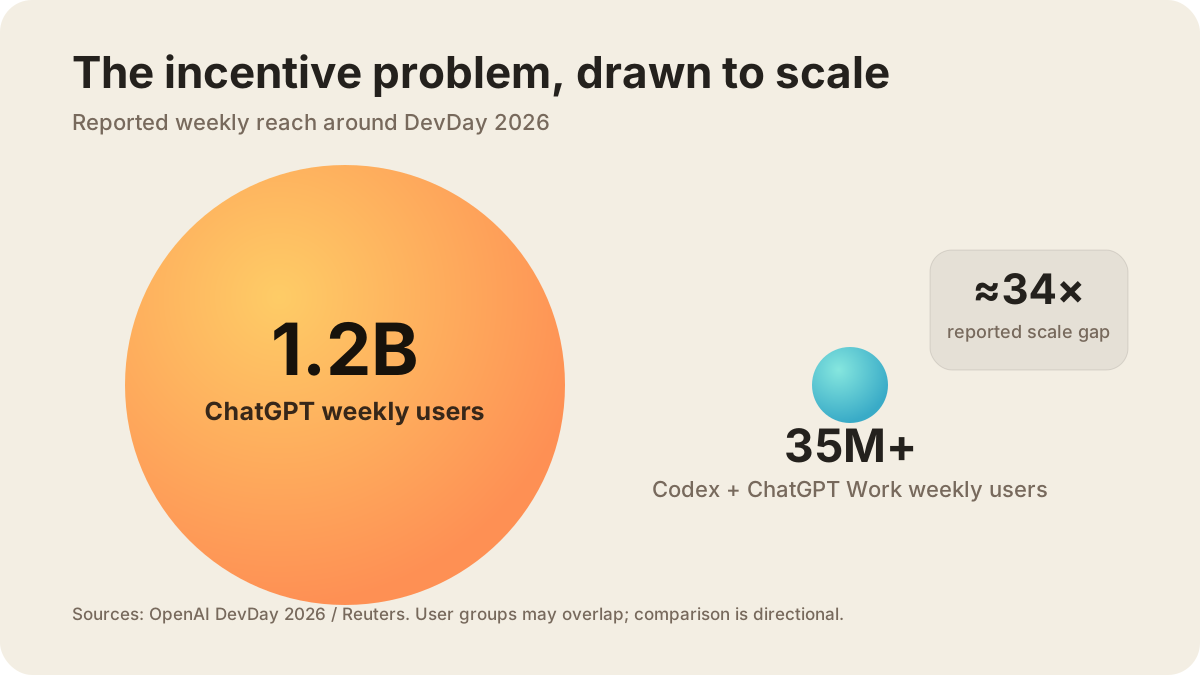
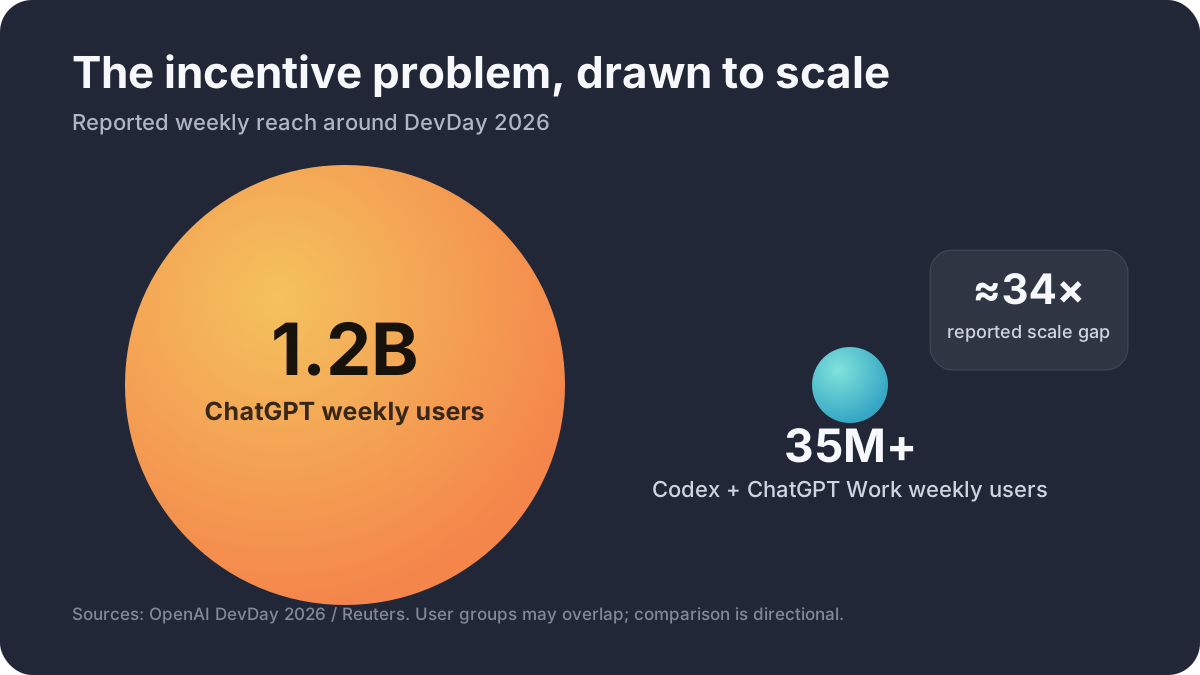
And they have the numbers to back it. Close to a billion weekly active users, supposedly — OpenAI now says 1.2 billion.
Which they want to monetize with ads.
So this whole Muse thingy taking off is a big spanner in the works for them.
So they needed to strengthen their offering on the consumer side with Dots. Even though it is not available to free users at the moment (or even Plus users), it is clearly going to be once the product stabilizes and they find enough compute.
And that’s the reason for the second-rate treatment the Codex and Work users get. As far as OpenAI is concerned, the potential for high future revenue from free users is preferred to actual real revenue from Codex users.
Just like the “pre-revenue is better than real revenue” quote from the Silicon Valley TV series, from which clearly all these companies have taken notes.
My Subscription
As you probably noticed from my previous posts (A Tale of Two Coding Subscriptions), I’m a big fan of Codex and a current user.
My prediction is that the Codex subscription is going to get more enshittified over time, and this is just the start.
Does that mean I’m jumping ship? Sadly, no. Because Anthropic continues to degrade model output for ML work, which forms a substantial part of my day-to-day work, and doesn’t allow the use of third-party harnesses without workarounds.
OpenAI is at the crossroads of consumer and enterprise, and they cannot choose both. They need to pick one and stop the random FOMO-fuelled product launches that are subpar. At this rate, they will end up as Perplexity, which was the first to showcase an amazing interface but made a series of dumb decisions down the road to end up as a zombie company.